
Top 10 Most Photogenic Villages in the Yorkshire Dales
There are plenty of reasons why photographers love the Yorkshire Dales.
The obvious one is the landscape. Limestone scars, rolling hills, dramatic valleys, meandering rivers, dry stone walls and those wonderfully atmospheric Dales skies all provide an almost endless supply of photographic opportunities.
But for me, some of the most interesting photographs can be found when you start looking a little closer.
The Yorkshire Dales is packed with villages and hamlets that seem to have grown organically from the landscape around them. Weathered stone cottages, old bridges, village greens, ancient churches and winding lanes all provide wonderful subjects, particularly when combined with the surrounding countryside.
And while there are plenty of contenders for the title of most photogenic village in the Yorkshire Dales, these are my personal top ten.
They aren't necessarily the biggest, the most famous or even the prettiest. They are simply the villages that I think offer photographers the most interesting opportunities.
So, in no particular rush, let's explore them...

1. Muker
If you asked me to choose just one village that sums up what makes the Yorkshire Dales so photogenic, I'd probably choose Muker.
Tucked away in Upper Swaledale, Muker is surrounded by exactly the sort of landscape that photographers dream about. Traditional stone cottages sit beneath steep-sided hills, dry stone walls divide the fields and the River Swale winds its way through the valley.
And then there are the hay meadows.
The meadows around Muker are some of the finest examples of traditional upland hay meadows in the country. Between late May and early July, they can be absolutely spectacular, with an explosion of wildflowers adding colour to an otherwise very green landscape.
For photography, this gives you a huge range of possibilities.
You can concentrate on the village itself, looking for compositions that incorporate the cottages and surrounding hills, or head out onto the footpaths and use the meadows, barns and drystone walls to create more expansive landscape images.
Personally, I love Muker when the weather is doing something interesting. A little mist hanging around the hills, shafts of sunlight breaking through the clouds or a dramatic evening sky can transform an already beautiful scene.
And if you want to combine village photography with a longer walk, the paths around Muker provide plenty of opportunities to explore the wider landscape.
Photographer's tip: Visit in June for the hay meadows, but don't restrict yourself to sunny weather. Cloud, mist and even a little rain can give Swaledale a wonderful atmosphere.

2. Burnsall
Burnsall is one of those villages that almost looks as though somebody designed it specifically for photographers.
Set on a bend in the River Wharfe, the village is surrounded by hills and centred around its famous stone bridge. The combination of river, bridge, village green, traditional buildings and surrounding countryside gives you an extraordinary number of ways to approach the same scene.
The bridge is probably the obvious starting point, but that's not necessarily a bad thing.
One of my favourite things about photographing places like Burnsall is trying to find something slightly different from the obvious postcard photograph. Move along the river. Change your focal length. Look for reflections. Include some foreground interest.
You might even discover that the photograph you eventually take has very little to do with the scene you initially went there to photograph.
Burnsall is also a great example of why light matters more than location. On a dull afternoon it can look pleasant enough, but return during golden hour, with warm light hitting the stone buildings and the river reflecting the sky, and it becomes something else entirely.
One practical point: Burnsall can become extremely busy, particularly at weekends and in good weather, and parking is now very limited. The National Park actively encourages visitors to consider alternatives to driving directly into the village.
Photographer's tip: Don't just photograph the bridge from the obvious riverside viewpoint. Walk along the Wharfe and look for compositions where the river leads your eye towards the village.
3. Middleham
Middleham is perhaps a slightly unusual choice for a list of photogenic Yorkshire Dales villages because, technically, it's a market town.
But I'm including it anyway.
For a photographer, Middleham has something that many of the smaller villages lack: layers of history.
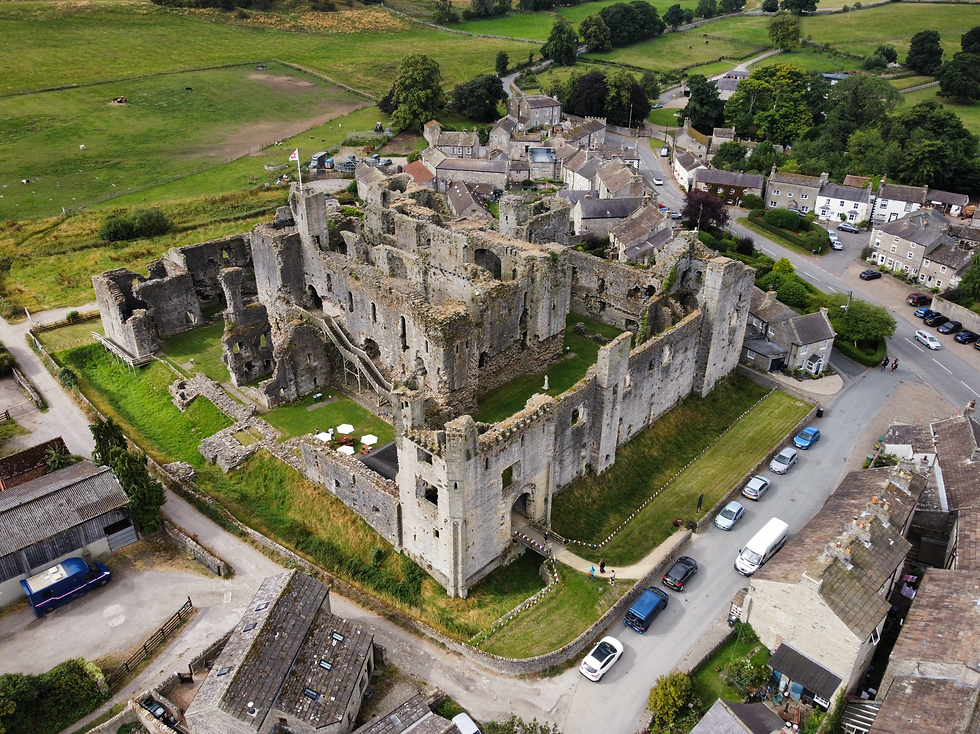
Dominating the town is Middleham Castle, the twelfth-century castle famously associated with Richard III. Around it are attractive Georgian buildings, market squares and traditional streets, while the surrounding countryside provides the wider Dales context.
Then there's the horses.
Middleham has been associated with racehorse training for more than 200 years and several hundred horses are still stabled in and around the town.
That gives you an interesting mixture of photographic subjects.
One minute you're photographing medieval stonework, the next you're trying to capture a racehorse being exercised along the road.
And I think that contrast is what makes Middleham so interesting.
It isn't simply a pretty village. It has character, movement and history.
Photographer's tip: Look beyond the castle. The streets around the market squares offer some lovely architectural compositions, while the surrounding lanes can provide opportunities to photograph horses against the Dales landscape.

4. Horsehouse
Now we're getting into the lesser-known territory.
Horsehouse sits in Coverdale, a wonderfully quiet corner of the Yorkshire Dales that doesn't receive anything like the attention given to places such as Malham or Grassington.
And that's precisely why I like it.
Horsehouse is small, understated and surrounded by the sort of rural landscape that makes the Dales so special. The River Cover runs nearby and the village sits along the old routes that crossed the dale, including the historic route towards Kettlewell over Park Rash.
There isn't one enormous landmark here that demands your attention.
Instead, you have to slow down.
Look at the cottages. Look at the stone walls. Look at the way the road disappears around the bend. Look at the hills behind the village.
This is exactly the sort of place where photography becomes more about seeing than simply recording.
Horsehouse also makes a great base for exploring Coverdale, particularly if you're interested in finding photographs away from the better-known tourist locations.
Photographer's tip: Use a longer lens to isolate individual buildings and landscape details. In a small village like Horsehouse, you don't always need a wide-angle lens to tell the story.

5. Kilnsey
Kilnsey is cheating slightly.
Well, perhaps not cheating, but it would be difficult to photograph the village without photographing the enormous limestone cliff that dominates it.
Kilnsey Crag rises dramatically above the village and the River Wharfe, creating one of the most recognisable landmarks in Wharfedale. The crag is around 170 feet high and has a spectacular 40-foot overhang.
And that gives photographers a very useful compositional problem to solve.
How do you photograph something that big?
You can go wide and incorporate the crag, valley and village into one image, but don't overlook the possibilities of getting closer and using the rock itself as a graphic element.
The surrounding landscape is also full of those classic Dales ingredients: drystone walls, fields, barns and limestone hills.
Kilnsey is particularly interesting because the scale of the landscape changes dramatically depending on your viewpoint.
Stand beneath the crag and it feels enormous.
Move further away and it becomes part of a much broader landscape.
That's a useful reminder that sometimes the best way to photograph a subject is simply to change your relationship with it.
Photographer's tip: Try a telephoto lens from further down Wharfedale. Compressing the landscape can make Kilnsey Crag appear even more imposing.

6. Langthwaite
If you've ever watched All Creatures Great and Small, there's a good chance Langthwaite will look familiar.
The village is one of the main settlements in Arkengarthdale and has been used extensively as a filming location, including the famous title sequences for the series.
But even without its television connections, Langthwaite is well worth photographing.
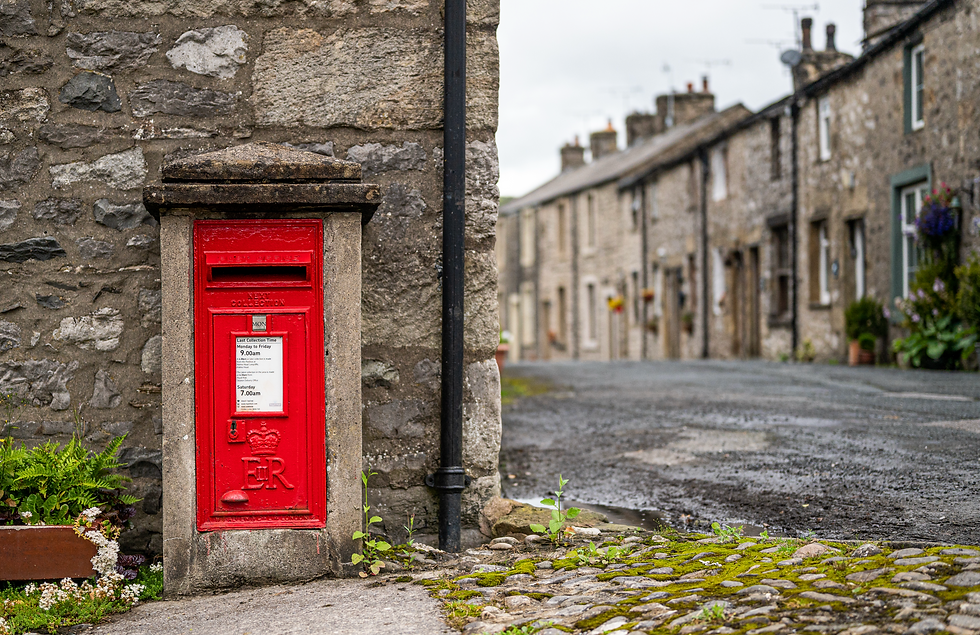
Arkengarthdale has a slightly different character to some of the more famous Dales. It feels wilder and more remote, with a rugged landscape surrounding the small collection of stone buildings.
The village itself provides plenty of traditional architectural detail, while the surrounding valley gives you opportunities to step back and put the settlement into context.
And because Langthwaite isn't quite as immediately recognisable as somewhere like Kettlewell or Burnsall, there's more opportunity to create your own interpretation of it.
Photographer's tip: Don't arrive with the intention of simply recreating the television shots. Explore the surrounding lanes and valley and look for your own compositions.
7. Langcliffe
Langcliffe is one of those places that I think photographers can easily overlook.
It's just upstream from Settle in Ribblesdale, but its location provides a fascinating combination of village architecture and industrial history. Nearby Langcliffe Scar rises above the village, while the old Craven Lime Works and its enormous Hoffman Kiln provide a very different photographic subject.
This is one of the reasons I enjoy photographing the Yorkshire Dales.
You can move from traditional stone cottages to evidence of the area's industrial past within a relatively short distance.
And that gives your photographs a little more depth.
Rather than simply photographing a pretty village, you can start telling a story about how people have lived and worked within the landscape.
Look for details: old stonework, doorways, walls, industrial structures and the relationship between the village and the surrounding hills.
Photographer's tip: Try combining the architecture of Langcliffe with the surrounding limestone landscape rather than treating the village and countryside as separate subjects.

8. Arncliffe
Arncliffe is tiny, peaceful and wonderfully photogenic.
Nestled in Littondale, the village sits beside the River Skirfare and is surrounded by limestone hills and farmland. At its heart is a lovely village green surrounded by traditional stone buildings.
It is also famous for being the original setting for Emmerdale Farm, with the village's Falcon Inn standing in for the Woolpack during the show's early years.
But, again, I think its greatest attraction for photographers is the landscape.
Littondale is one of those places that feels slightly removed from the rest of the Dales. The River Skirfare meanders along the valley floor while the steep-sided hills rise around it.
It's a brilliant place for practising one of the most important skills in landscape photography: simplifying a scene.
Rather than trying to photograph everything, look for the small relationships between the elements.
A stone barn against a hillside.
A line of trees leading towards the village.
The river disappearing around a bend.
A cottage framed by an old stone wall.
These can often make much stronger photographs than simply pointing your camera at the whole village.
Photographer's tip: Walk away from the village and look back towards it. Arncliffe becomes particularly interesting when you start incorporating the surrounding landscape into your compositions.

9. Dent
Technically, Dent isn't in Yorkshire.
There, I've said it.
The village is actually in Cumbria, but it sits within the Yorkshire Dales National Park and is such a wonderful example of a Dales village that I couldn't leave it out. The National Park itself describes Dent as one of the loveliest Dales villages, with its narrow cobbled street, white-walled cottages and ancient church.
And those white cottages make Dent particularly distinctive.
Much of the Yorkshire Dales is characterised by grey limestone, so the lighter buildings of Dent create a slightly different visual palette.
The village is compact enough to explore on foot, but don't restrict your photography to the main street.
Look down the little lanes. Look for details in the stonework. Find viewpoints that reveal the village's position within Dentdale.
And if you're there with a landscape photography mindset, Dentdale itself offers plenty of opportunities beyond the village.
This is another location where changing the weather can completely alter the mood. Mist hanging in the valley can make Dent feel almost timeless, while low evening sunlight can bring out the texture of the surrounding hills and stone walls.
Photographer's tip: Dent is particularly good for black and white photography. The combination of pale buildings, stone textures, cobbles and dramatic surrounding hills gives you plenty of tonal contrast to work with.

10. Kettlewell
And finally, we have Kettlewell.
If you've ever wondered what a quintessential Yorkshire Dales village should look like, Kettlewell would be a pretty good place to start.
Set in a narrow section of Upper Wharfedale, Kettlewell is packed with traditional grey stone cottages, narrow lanes and little bridges crossing the beck. Its position at the junction of historic routes also explains why the village developed as an important stopping point for travellers.
It is almost ridiculously photogenic.
But that can actually make it quite challenging.
When somewhere is this obviously beautiful, it's very easy to take the obvious photograph and go home.
Instead, try to spend some time exploring.
Look for reflections in the water. Use the bridges as foreground interest. Find patterns in the stonework. Photograph the village early in the morning before it gets busy.
And don't forget the surrounding landscape.
Kettlewell is also a great starting point for walks into Upper Wharfedale, with views towards Great Whernside, Kilnsey and the surrounding hills.
The village is also famous for its annual Scarecrow Festival, which adds a completely different and rather more quirky photographic opportunity to the mix.
Photographer's tip: Get off the main road and explore the narrow lanes. Some of the most interesting photographs in Kettlewell can be found away from the obvious viewpoints.
What makes a Yorkshire Dales village photogenic?
Looking back at this list, there is a common thread running through all ten villages.
It's not simply that they're pretty.
In fact, I'd argue that pretty isn't necessarily enough to make somewhere interesting to photograph.
The best photographic villages tend to have a relationship with the landscape around them.
The buildings are made from local stone. Roads and paths follow the contours of the land. Rivers run through the valleys. Fields are divided by dry stone walls. Old barns sit among the meadows.
In other words, the landscape and the villages aren't separate things.
They're part of the same story.
And that, for me, is what makes photographing the Yorkshire Dales so rewarding.
You don't need spectacular weather or an exotic location. Sometimes all you need is a small village, an interesting sky and the time to walk around and look at things differently.
So if you're planning a Yorkshire Dales photography trip, don't just make a list of famous waterfalls, mountains and viewpoints.
Put a few villages on the itinerary as well.
You might just find that they're where some of your favourite photographs are made.
My Top 10 at a glance
1. Muker – Best for hay meadows and classic Swaledale scenery
2. Burnsall – Best for rivers, bridges and traditional Dales architecture
3. Middleham – Best for history, horses and architecture
4. Horsehouse – Best for quiet, off-the-beaten-track photography
5. Kilnsey – Best for dramatic limestone scenery
6. Langthwaite – Best for rugged landscapes and All Creatures Great and Small fans
7. Langcliffe – Best for combining village and industrial heritage photography
8. Arncliffe – Best for peaceful village and valley compositions
9. Dent – Best for cobbled streets, white cottages and black-and-white photography
10. Kettlewell – Best for classic Yorkshire Dales village photography
And, of course, this list is entirely subjective.
The great thing about photography is that there is no definitive list of the best places to photograph. Give ten photographers the same ten villages and you'll probably end up with ten very different favourites.
Which is exactly how it should be.
Why not leave a comment to let me know what your Top 10 Most Photogenic Yorkshire Dales Villages would be?
Comments